
The Unaddressed War: How Islamist Terrorism is Eroding Our World

November 19, 2025 Hriday Raval
Note: The listed incidents represent a minute fraction of the millions of Islamist Terrosism attacks carried out worldwide.
Introduction: The Battle for Our Future
There are long-standing debates about how terrorism should even be defined. Analysts often repeat phrases such as “there is no universally accepted definition of terrorism” or “one man’s terrorist is another man’s freedom fighter.” Others argue that “terrorism has no religion,” emphasising that violent extremism can emerge in any community.Yet, for this op-ed, the focus is not on abstract theories but on the practical and observable realities shaping the world today—realities that people across continents have witnessed first-hand. While it is undeniably true that many of the Muslims or the followers of Islam are peaceful and not involved in violence, it is also true that all the global terrorist incidents are committed by groups that explicitly claim inspiration from extremist Islamist ideologies and hence the term “Islamist Terrorism” originates.
We live in an age of silent wars. Some are fought with bombs and bullets, their devastation visible on our screens. Others unfold quietly, through ideas that radicalise minds, through laws that encroach without notice, and through demographic shifts that subtly alter the foundations of societies. Understanding this dual assault is the first step toward survival. As researcher Hriday Raval warns, “The cost of ignoring Islamist terrorism is not measured in wars alone, but in the slow erosion of the world we hope to protect tomorrow.”
This op-ed charts that erosion—defining the threat, mapping its global spread, and outlining a defence strategy as multi-layered as the challenge we face.
The Foundational Definitions: Naming the Threat
Naming is the first step to confronting a threat. This analysis builds on the clear, precise definitions that Hriday Raval creates in context, providing the clarity needed to visualise the scope of the challenge."Islamist terrorism refers to acts of terrorism defined under national and international laws, carried out by individuals or groups who claim to act in the name of Islam, motivated by a fundamentalist and extremist interpretation of Islamic teachings and driven by political, religious, or ideological objectives. These acts may include but are not limited to bombings, armed attacks, kidnappings, assassinations, forced conversions, hostage-taking, gang rapes, and instances of violence intended to spread fear, intimidate civilian populations, destabilise societies, and influence political or governmental actions."
It encompasses Islamist Hard Terrorism (direct violent acts) and Islamist Soft Terrorism:- Islamist Hard Terrorism: Includes violent acts such as bombings, armed attacks, kidnappings, assassinations, hostage-taking, gang rapes, forced conversions, and other forms of violence designed to spread fear, destabilize societies, intimidate civilian populations, and coerce governments into specific actions.
- Islamist Soft Terrorism: Involves psychological manipulation, propaganda, Love-Jihad, radicalisation, and fostering division among religious, ethnic or political groups. Examples include a deliberate refusal to prosecute or punish acts of terror, covering up terrorist activities, and using threats or coercion to suppress attempts to seek justice for terrorism.
Few Examples of Islamist Hard Terrorism:
- Pahalgam Attack, India (2025) - Militants linked to Lashkar-e-Taiba opened fire on tourists in Pahalgam, after removing their pants and confirming them as Hindu, killing 26 people. Indian investigators confirmed the attackers were Pakistani nationals affiliated with the Islamist militant network.
- Red Fort Car Blast, New Delhi (2025) - A deliberate vehicle explosion near Red Fort Metro Station killed at least 10 people and injured over 30. While the probe is ongoing, early investigations suggest the blast was a planned act with hallmarks of Islamist terror operations.
- 9/11 Attacks, USA (2001 — enduring legacy referenced in 2025 security doctrine) - Al- Qaeda’s hijacking of four commercial aircraft and crashing it that killed nearly 3,000 people. Even in 2025, it remains one of the most defining examples of modern Islamist terrorism and continues to shape global counter-terrorism policy.
- Boko Haram Schoolgirl Kidnappings in Nigeria (2014) - The Islamist militant group Boko Haram kidnapped 276 schoolgirls from Chibok, intending to terrorize the population and impose their ideological Islamic beliefs.
- 26/11 Mumbai Attacks, India (2008) - Lashkar-e-Taiba terrorists carried out coordinated assaults across Mumbai, killing over 170 people. The attack continues to be cited in 2025 as a benchmark example of cross-border Islamist terrorism.
- London 7/7 Bombings, United Kingdom (2005) - Four suicide bombers inspired by extremist Islamist ideology targeted London’s transport system, killing 52 and injuring hundreds. In 2025, it remains a critical reference point for Europe’s counter-radicalization strategy.
- Propaganda through ISIS Recruitment Videos (2014–2019): ISIS created sophisticated online content to radicalize and recruit individuals globally, especially targeting youth through emotional and religious manipulation.
- Radicalization in Educational Institutions (Global): Madrassas and schools have been accused of indoctrinating students with extremist Islamist ideologies, subtly encouraging intolerance or violent jihad.
- Cover-ups of Terrorist Activities: Attempts to hide involvement or support for terrorism, such as Pakistan’s denial of harboring Osama bin Laden, despite his presence in Abbottabad until he died in 2011.
- Blasphemy Accusations Leading to Violence: Radical groups and governments using blasphemy laws or accusations to manipulate public sentiment, as seen in several cases in Pakistan, where individuals or groups are persecuted under these laws.
- Cultural and Religious Intimidation: Forced imposition of dress codes, dietary restrictions, or practices (e.g., forcing non- Islamics to adhere to Sharia principles in certain Islamist-controlled regions).
- Online Hate Campaigns and Cyber Radicalization: Islamist groups have used platforms like Twitter and Facebook to create fear and division among religious or ethnic groups through misinformation and inflammatory content.
- Boycotting and Marginalization of Communities: Certain groups using economic or social pressures to ostracize minorities, fostering societal division and tension.
- 'Love Jihad’: The alleged phenomenon where individuals from Islamist groups exploit romantic relationships to target individuals from other religious communities, particularly Hindus and Christians, for conversion to Islam. Such activities are considered psychological manipulation and create interfaith distrust and societal tensions, aligning with the tactics of soft terrorism.
- Contributing to or Manufacturing Anti-Israel Protests: Organized and systematic efforts to fuel anti-Israel protests and antisemitic actions following Israel's 2023 defensive war against terrorists. These actions manipulated global public opinion, leveraging misinformation and exploiting sentiments to vilify a sovereign state's self-defence measures.
The Ideological Engine: The Distortion of a Concept
It is fueled by a deliberate, fundamentalist distortion of Jihad. In mainstream Islamic theology, Jihad is a profound internal struggle toward self-improvement and spiritual growth. Verses in the Quran, such as "Fight in the way of Allah those who fight you but do not transgress. Indeed, Allah does not like transgressors" (Surah AlBaqarah 2:190), set a context of sanctioned self-defense.These verses are wrenched out of their historical and theological context by Islamist terrorists. They reinvent Jihad as a perpetual, obligatory war against every nonbeliever, and any government they happen to define as apostate. This warped interpretation provides a divine mandate for the brutal violence of Islamist Hard Terrorism and the subtle corrosive tactics of Islamist Soft Terrorism. This is supercharged by Islamist Cyber Terrorism, defined as the use of digital tools by Islamist extremists to spread propaganda, recruit members, and coordinate attacks, creating a borderless battlefield.
The Global Battlefield: A Coordinated Assault
Demographic revolution and ideological warfare are reshaping the world's security environment. The global Islamic population is projected to reach 2.2 billion and grow faster than any other major religion, which dramatically extends the operational environment for Islamist terrorism. It is not about isolated attacks, but rather systematic campaigns to exploit demographic shifts.SOUTH ASIA: The Heartland of Radicalisation
Soft Terrorism Precedent: The international propagation of Salafism and Wahhabism, funded by over $75 billion from Saudi Arabia (1982-2005), established a global network of intolerance through 200 Islamic colleges, 210 Islamic centers, 1,500 mosques, and 2,000 schools. In Pakistan, state patronized Deobandi madrassas exploded from 900 in 1971 to over 35,000 by 2015, creating a factory for jihad.Hard Terrorism Outcome: This infrastructure fuels groups like Lashkar-e-Taiba (26/11 Mumbai attacks, 166 killed), Jaish-e-Mohammed, and enables attacks like the Pahalgam attack on Hindu tourists. The Pakistani state's "unholy alliance" with jihadist proxies exemplifies state-level Islamist Diplomacy.
Bangladesh Crisis: Jamaat-e-Islami militias have led pogroms against Hindus, with over 40 temples vandalized in a single week during coordinated attacks. The transnational Jamaat-ul- Mujahideen Bangladesh (JMB), with AlQaeda links, actively expands its network into India's West Bengal and Assam.
INDIA: The Frontline of Hybrid Warfare
Soft Terrorism: The alleged system of 'Love Jihad' represents psychological manipulation and demographic warfare. The Waqf Board, illegally occupying and managing over 800,000 properties, has been accused of exploiting "Waqf by usage" clauses to make claims on monuments like the Taj Mahal. The banned Popular Front of India (PFI) employed political activism combined with covert radicalization from Kerala to West Bengal.Hard Terrorism: Apart from 26/11, Pahalgam attack, Red-Fort Delhi blast and hundreds of them beyond cross-border attacks, domestic radicalization manifests in cases like the "Kerala ISIS module" where women were recruited for ISIS roles.
THE MIDDLE EAST: The Epicentre of Barbaric Hard Terrorism
Hard Terrorism: The October 7th, 2023 Hamas Attack—the massacre of over 1,200 Israelis involving systematic sexual violence and kidnappings—stands as the archetype of Hard Terrorism driven by genocidal Antisemitism.Soft Terrorism & State Sponsorship: Iran spends billions annually funding proxies like Hamas and Hezbollah, exporting its revolutionary ideology as a key pillar of its Islamist Diplomacy.
AFRICA: The Expanding Frontier
Africa is now the new frontline, accounting for 48% of global terrorism deaths (GTI 2024). The Islamic population in SubSaharan Africa projected to exceed 400 million creates a demographic reality exploited by jihadists.Hard Terrorism: Boko Haram (2014 Chibok schoolgirl kidnappings), AlShabaab, and ISIS affiliates continue expansion. A 2024 massacre of over 50 Christians in a Nigerian village and beheadings by ISISlinked militants in Mozambique show the campaign to carve out new caliphates.
EUROPE AND THE U.K.: Radicalisation within Open Societies
Europe's Islamic population has grown from 19.5 million in 1990 to over 44 million in 2025. In the UK, the Islamic population has surpassed 4 million, with more than a dozen Islamic mayors now in office.Hard Terrorism: Includes the 7/7 London Bombings (52 killed), Paris Bataclan Attack (130 killed), beheading of Samuel Paty (2020), and 2024 foiled ISISK plots to attack Cologne Cathedral. UK authorities reported 19 individuals with suspected terror links entered as irregular migrants in 2022.
Soft Terrorism: A 2008 EU Commission study found potent Salafijihadist narratives—including Takfir (excommunication) and Dar alHarb (abode of war)—propagated through both online and face-to-face radicalization.
NORTH AMERICA: The Silent Resurgence
The Islamic population in the USA is approximately 4.5 million, one of the fastest growing religious groups, providing a larger base for radicalization.Hard Terrorism: The 9/11 Attacks (2,977 killed), New Orleans Attack (2025, 14 dead), and a troubling 2024 surge with seven Islamist extremist incidents tracked by the ADL—compared to only six far right incidents—including foiled mass casualty plots and an antisemitic shooting in Chicago.
Soft Terrorism: Cyber Islamist Terrorism via ISIS online propaganda recruits "lone wolves." The case of Zohran Mamdani, a New York politician whose campaign was reportedly influenced and funded by networks linked to Jamaat-e-Islami and Hamas, illustrates political infiltration.
SOUTHEAST ASIA: The Role of Radical Madrasas
Fusion of Hard & Soft: While most madrassas are moderate, empirical research shows a tiny subset is critical. In Indonesia, only about 30 out of 14,000 madrassas (0.2%) are radical hubs for Jemaah Islamiyah (JI). At alIslam, 91% of students believed it was their duty to kill nonIslamics compared to 35% at other schools. These schools provided planners for the 2002 Bali bombings; JI attackers had madrasa attendance rates 19 times higher than the general population.
The Call to Action: A Blueprint for Defense
1. Academic and Legislative Integration:
The definition of Islamist Terrorism must be integrated into school and university curricula worldwide. Simultaneously, legislatures must update laws to counter both violent acts and nonviolent incitement. Legal proceedings must recognize the full spectrum of the threat, with strict penalties for hate speech and greater transparency in foreign funding of religious institutions.
2. The Technological Vanguard: Operational Tools for a Safer Future
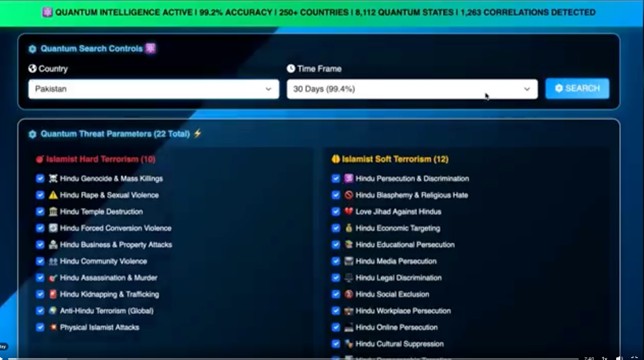
The digital battlefield requires a technological shield. Under the research of Hriday Raval, a suite of three advanced intelligence platforms has been developed as live prototypes:
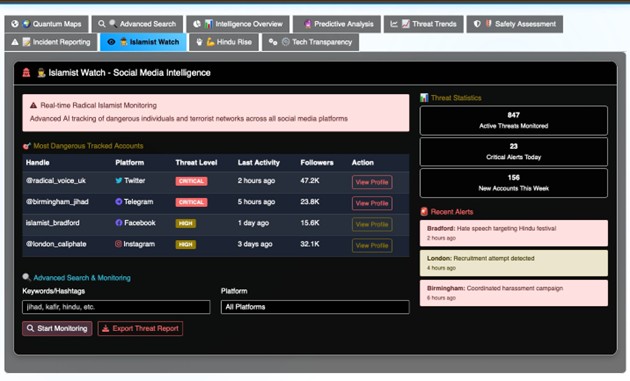
Islamist Watch: Tracks radical Islamist activity across social media in realtime, providing actionable threat levels and live alerts.
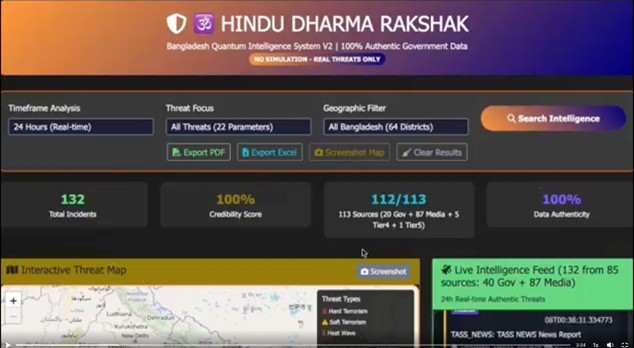
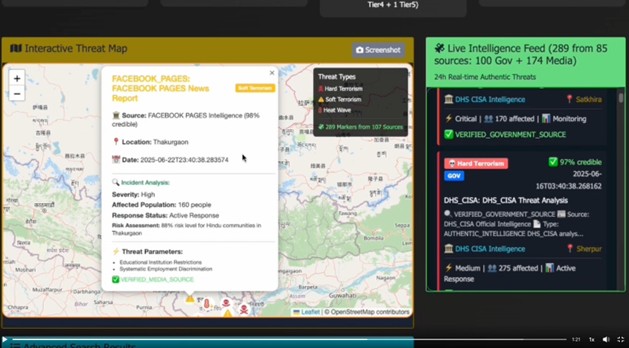
Hindu Dharma Rakshak: Uses quantum inspired analytics to monitor 22 threat parameters across Bangladesh, predicting risks to vulnerable communities with high accuracy.
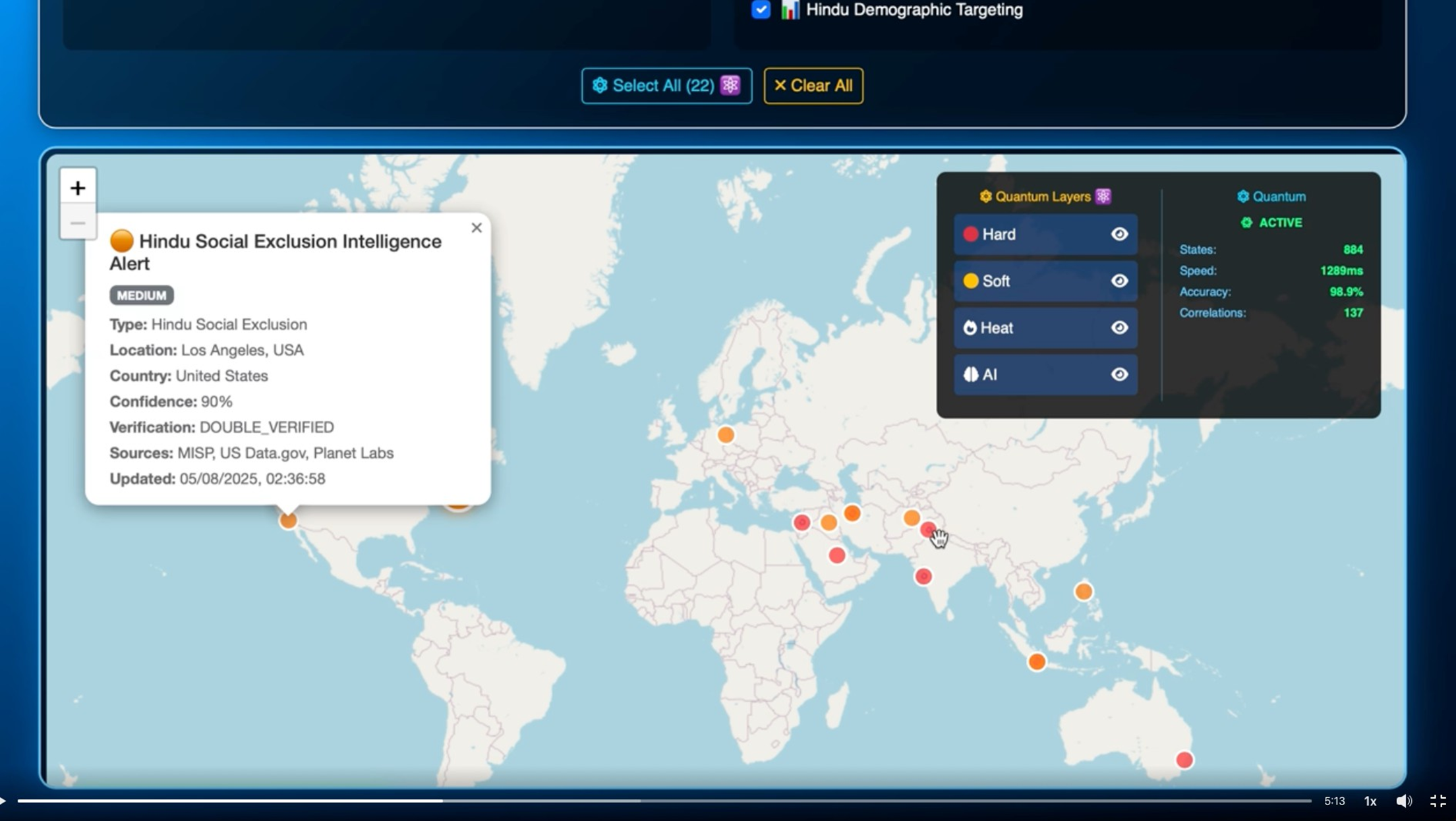
Bharat Shakti: A global scale platform monitoring 250+ countries for both Islamist Hard and Soft Terrorism parameters with 99.2 accuracy.
3. Unifying for a Collective Defense:
International cooperation on intelligence sharing, deradicalization programs, and countering state sponsors of Islamist Terrorism is nonnegotiable. We must foster global awareness and stand together against the forces of division and hatred.
Conclusion
The war against Islamist Terrorism is a contest for the future itself. It is fought on countless fronts— in our streets, on social media, within governments, and in the minds of future generations. Recognizing both the overt force of Islamist Hard Terrorism and the quiet spread of Islamist Soft Terrorism allows the world to prepare an equally powerful defense. The cost of inaction is the erosion of everything we hold sacred. The time for decisive, united action is not tomorrow — it is now.
Reference
-
Raval, Hriday. (2023). Definitions of Islamist Terrorism, Islamist Diplomacy, and Cyber Islamist Terrorism. [Unpublished manuscript and operational frameworks].
-
-
Source for all verbatim definitions used throughout the article.
-
-
Shah, S. S. H. (2023). Religious Education and Extremism in Pakistan: From Deobandi Militancy to a Rising Sufi Fanaticism. Journal of Asian Security and International Affairs.
Source for data on madrassa growth (900 in 1971 to 35,000 by 2015), state patronage under Zia-ul-Haq and Musharraf, and the rise of Barelvi extremism.
-
Amnesty International. (2021). Bangladesh: Attacks on Hindus during festival must be investigated. Amnesty International Public Statement.
Source for documentation of temple vandalism (over 40 temples) and violence against the Hindu minority in Bangladesh, linked to groups including Jamaat-e-Islami.
-
Global Terrorist Database (GTD). (2024). National Consortium for the Study of Terrorism and Responses to Terrorism.
Source for data on the 26/11 Mumbai Attacks, Pahalgam attack, and other incident statistics in South Asia.
-
The Ministry of Home Affairs, India. (2022). Ban on the Popular Front of India (PFI). Government of India Notification.
Official documentation on the activities and banning of the PFI for its involvement in radicalization and violence.
-
Israeli Security Agency (Shin Bet) & Israel Defense Forces (IDF). (2023). Preliminary Report on the October 7th Hamas Attack.
Source for the death toll (1,200+), details of sexual violence, and kidnappings.
-
The U.S. Department of State. (2024). Country Reports on Terrorism.
Source for information on state sponsorship of terrorism by Iran and its proxies, including Hamas and Hezbollah.
-
Institute for Economics & Peace (IEP). (2024). Global Terrorism Index 2024.
Source for the statistic that Africa accounts for 48% of global terrorism deaths, and data on Boko Haram, Al-Shabaab, and ISIS affiliates.
-
Human Rights Watch. (2024). Nigeria: Boko Haram Attacks on Christians in the North. Reporting on specific massacres, including the 2024 killing of over 50 Christians in a Nigerian village.
-
Europol. (2023). European Union Terrorism Situation and Trend Report (TE-SAT).
Source for data on foiled plots (e.g., Cologne Cathedral), attack trends, and the role of online radicalization.
-
House of Commons Library, UK. (2023). Migration Statistics.
Source for data on irregular migrants and the figure of 19 individuals with suspected terror links entering in 2022.
-
European Commission. (2008). Study on the Best Practices in Cooperation between Member States and Civil Society in the Prevention of Radicalisation.
Source for the findings on Salafi-jihadist narratives, concepts of Takfir and Dar al-Harb, and the role of face-to-face radicalization.
-
ADL Center on Extremism (COE). (2024). Report on the Surge of Islamist Extremist Incidents in the United States.
Source for the data on seven Islamist extremist incidents in 2024, compared to six far-right incidents, and details on the New Orleans attack, Chicago shooting, and foiled plots.
-
Federal Bureau of Investigation (FBI). (2024). Press Releases on Terror-Related Arrests. Official source for information on cases involving Anas Said (ISIS propaganda), Nasir Ahmad Tawhedi (ISIS-K plot), and others.
-
New York State Board of Elections & Campaign Finance Records. (2024).
Publicly available source for tracing the campaign and affiliations of politician Zohran Mamdani.
-
Atran, S., Magouirk, J., & Ginges, J. (2019). Radical Madrasas in Southeast Asia. In The Oxford Handbook of Terrorism.
Source for empirical data on radical madrassas in Indonesia, including the statistic that 91% of students at al-Islam believed it was their duty to kill non-Islamics, and the link to Jemaah Islamiyah and the Bali bombings.
-
Pew Research Center. (2023). The Future of World Religions: Population Growth Projections, 2015-2060.
Source for global and regional Islamic population projections and growth rates.
-
Royal Embassy of Saudi Arabia, Washington D.C. & International Monetary Fund (IMF) reports on financial flows (1982-2005).
Source for the estimated $75+ billion in funding for the global propagation of Salafism/ Wahhabism, as cited in multiple academic and journalistic investigations.
-
The Quran, Surah Al-Baqarah (2:190). Translation of the verse cited in the article.
About the Author:
Hriday Raval is an Indian executive and investigative journalist whose work spans media, cybersecurity, homeland security, and global geopolitical affairs.
Note:
The article reflects the opinion of the author and not necessarily the views of the organisation.
Share this article:
© Copyright 2026 Indic Researchers Forum | Designed & Developed By Bigpage.in